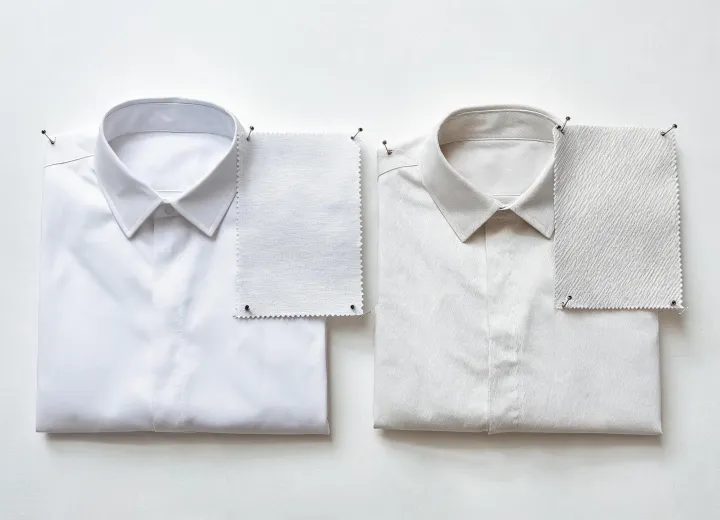
Premium shirting
Premium shirts, casual overshirts, tailored garments and accessory linings create different drape, seam, opacity, shrinkage and care requirements. Yarn count, weave and finishing route are recorded before approval.
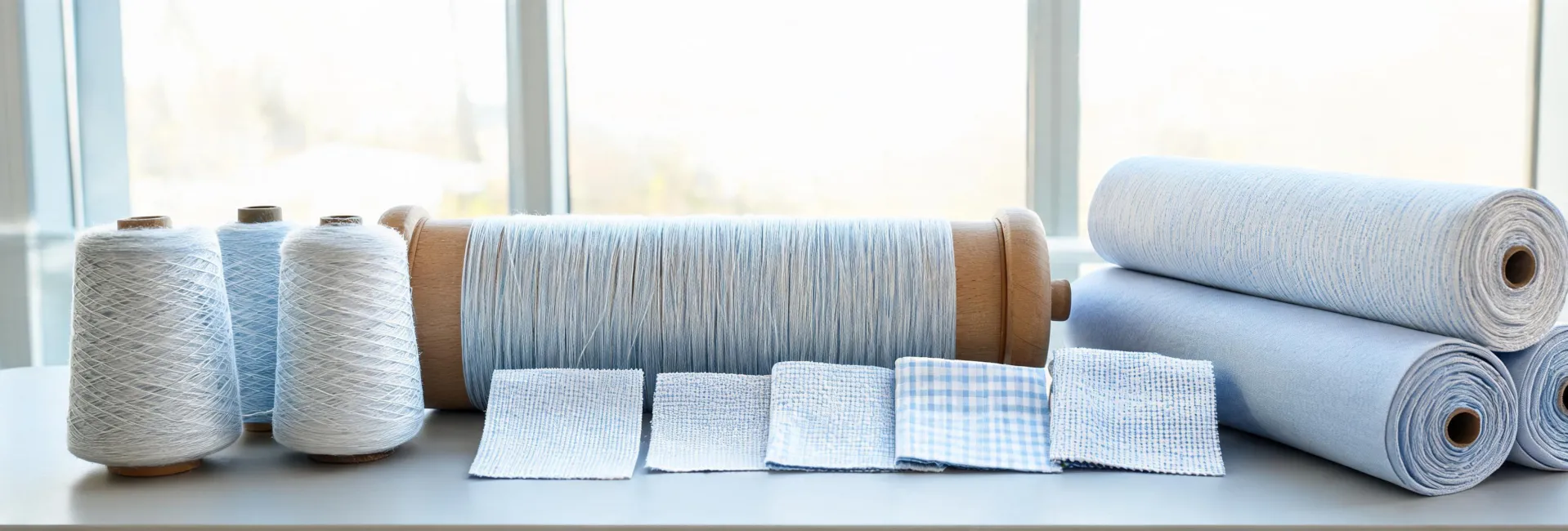
Application engineering
The right construction depends on contact, geometry, processing, cleaning and exposure. Application context determines which evidence deserves priority.
A single surface description cannot cover every service condition.
Premium shirts, casual overshirts, tailored garments and accessory linings create different drape, seam, opacity, shrinkage and care requirements. Yarn count, weave and finishing route are recorded before approval.

Formal and casual shirting requires yarn count, weave density, opacity, smoothness, shrinkage and colorfastness aligned with collar, cuff, seam and care route.

Tailored apparel requires drape, crease behavior, seam compatibility, dimensional stability and lot continuity for the ordered construction.
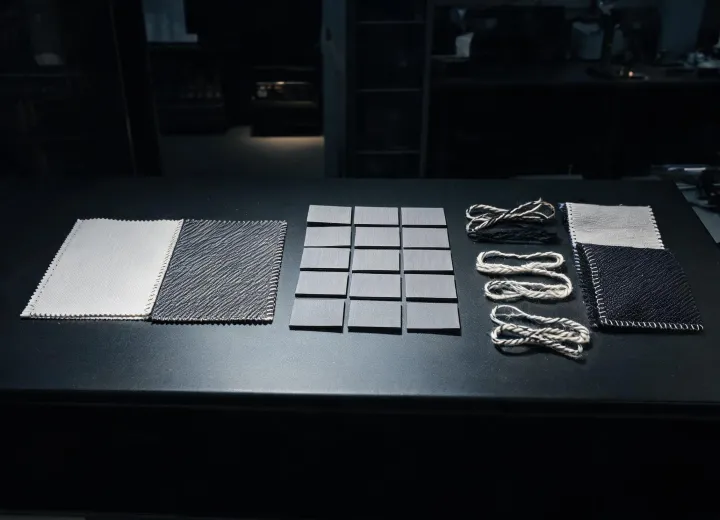
Accessories and linings require yarn strength, loom preparation, width, dimensional control, color continuity and finishing stability across production lots.
A soft, directional surface can support complex weaving and tactile goals, yet pile orientation may alter perceived shade. Cleaning response, edge behavior and yarn package compatibility need application trials.
Finishing route can tune handle, dimensional stability and care behavior, but flexibility, adhesion and aging depend on fiber blend, yarn twist, weave and finishing process. Values from one stack cannot be assigned to another.
| Decision input | Record before sampling | Typical verification | Boundary |
|---|---|---|---|
| Appearance | Color standard, grain, yarn twist and evenness, gloss | Controlled-light visual review and instrument data when specified | Illuminant and adjacent colors affect perception |
| Mechanical use | Yarn count, twist, elongation and processing route | Abrasion, flex, tensile or tear method selected by use | Different methods and endpoints are not equivalent |
| Care exposure | Wash chemistry, cycle, temperature | Repeated care testing on the actual construction | Spot tests do not establish long-term field life |
| Assembly | Yarn, weave, finishing heat and tension | Process trial followed by construction stability or appearance review | Textile data alone does not qualify a finished textile product |
We will translate geometry, exposure and care conditions into a material and verification brief.